
Cleaning for shops and malls
How cleaning works in a shop and a mall
Streak-free shopfronts, machine cleaning of the sales floor in quiet hours and an attendant while customers are in. We work so the store opens on time and so no customer ever notices the cleaning.
Cleaning built around
the trading day
We look after shops inside malls, standalone boutiques and flagships, supermarkets, galleries and the common areas of malls.
A generalist cleaning contractor turns up with an office routine: mops the floor once in the evening and never touches the window. By lunchtime the floor looks tired, hand marks show on the glass, and a wet floor in the aisle turns into a risk to customers.
Why a shop can’t run on
an office protocol
Four reasons. Pick one and see what it means for the contractor.
Cleaning happens with customers in
You can’t block an aisle or leave a wet floor on the sales floor: that’s a fall risk and a complaint to the mall. By day we work spot by spot and move machine cleaning to the quiet hours and to closing.
Machine cleaning happens in the quiet hours and at closing; by day we work spot by spot and never leave a wet floor in an aisle.
The window sells before the door does
The decision to come in is made out on the street. Streaks on the glass, hand marks at contact height and dust on the window lighting cost you the visit — so glass sits on its own schedule, not on “when we get round to it”.
Shopfront glass sits on its own schedule rather than being fitted in with whatever time is left.
Floors under constant traffic
Dirt walked in from outside, trolley and heel marks, spills by the food area. Machine cleaning and a protective coating keep the floor in a state where the shop doesn’t look worn out six months in.
Floors are machine cleaned and protected on a cycle, so the shop doesn’t look worn out six months in.
Ready at opening, not by lunchtime
The site is judged at the moment it opens and at peak hour. The shift is planned around the mall’s timetable: before opening, in the quiet hours and after closing.
The shift is built around the mall’s timetable: before opening, quiet hours, after closing.
What we do in a shop
The areas we
answer for
Tap an area on the plan to see where the risk sits and what we do about it.
Shopfronts and entrance
The decision to come in is made outside, and the glass is seen before the merchandise.
Glass washed inside and out before opening, frames and doors, the mat and the area in front of the door.
Sales floor
The largest area and the densest traffic: dirt walked in, trolleys, heels.
Machine cleaning in the quiet hours, damp cleaning by covering type, floor protection to a cycle.
Fitting rooms
An enclosed space where the customer is alone and notices everything.
Several rounds a shift: mirrors, benches, floor, hooks, baskets.
Till area
The most frequent point of hand contact in the shop.
Counters, belts, terminals and pin pads, touchpoints on every round.
Food area
Spills and food waste bring smell and stains onto the sales floor.
Tables and chairs, floors after spills, waste — to the footfall pattern.
Washrooms and back of house
A washroom shapes the review of a mall more than the range of shops does.
Three or four rounds, cleaned with disinfectant, consumables, plus staff corridors and goods-in.
Measured on site,
reported to you
The KPI and SLA framework is set for your site at launch, so quality can be checked rather than taken on trust.
What the client
facilities teams
Four things facilities teams answer for in front of their own management — and that we take on.
A site manager and a supervisor by name and direct number, not a general office line.
Shopfronts, floors and fitting rooms are signed off before the first customer, not finished off around them.
Machine cleaning and a protective coating on a cycle — floor replacement is pushed back by years.
Machinery, consumables and chemical safety data sheets sit with the contractor.
You don’t notice the right contractor while things go well — and they prove their worth the moment something goes wrong.
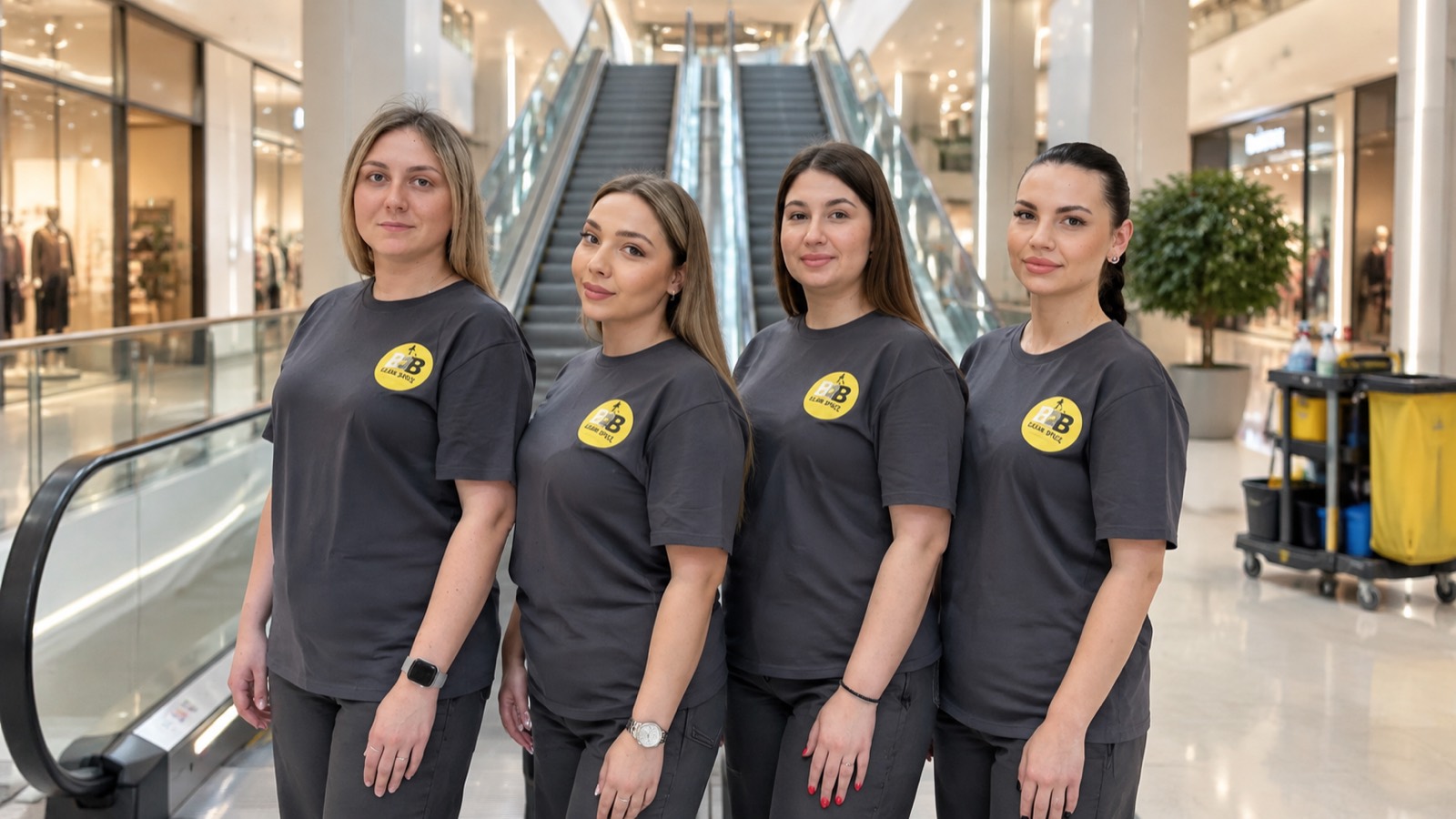
The shift starts before the first shoppers arrive: shopfronts, floors and food courts are ready for opening, and machine cleaning runs during low-traffic hours.
How many people
and hours a shop needs
Set the area and the schedule — you get the crew size, hours on site and a price range. The exact figure comes after the survey.
A day attendant is a cleaner who works during customer hours: marks on the window and glass, fitting rooms, spills, trolleys and baskets. They work spot by spot, with no buckets in the aisle and no wet floor underfoot.
Clear terms,
a straightforward start a straightforward start
Tap a stage to see what happens on site and what you get at the end of it.
Survey
A walk of the site, areas measured zone by zone, a look at the footfall and the quiet hours.
Quote
Method statement by area, a schedule to fit the mall’s timetable, a separate cycle for floors and glazing.
Launch
Crew selected and briefed, access agreed with mall management, machinery delivered, an initial deep clean.
Full operation
First quality inspection, checklist adjusted, SLA report issued.
Tell us
about the site
Send us the area and the shift pattern — we’ll arrange a survey and have your quote ready within five working days.
Al Barsha, Dubai, UAE