
Cleaning for restaurants and cafés
How cleaning works in a restaurant and a café
The hot line after service, extraction hoods and grease traps to a schedule, the dining room ready at opening. We work a night cycle, between kitchen shifts, so the place opens on time and passes an inspection on any given day.
Cleaning built around
the kitchen and the floor
We look after full-service restaurants, cafés and bakeries, bars and coffee shops, food-court units and delivery kitchens — from a single site to a chain.
A generalist cleaning contractor turns up with an office routine: wipes the surfaces, never takes the grease off the equipment and never touches the hood. A month of that and the kitchen looks tired, and at the inspection it’s the hoods and the gullies that come up.
Why a kitchen can’t run on
ordinary cleaning
Four reasons. Pick one and see what it means for the contractor.
Grease isn’t dust
A grease film doesn’t come off with ordinary products and a cloth: it takes alkaline chemicals, dwell time and heat. A non-specialist crew spreads it in a thin layer over the equipment and the floor — which is where the slippery floor and the smell come from.
Grease is lifted with alkaline products left for their dwell time, not wiped off a surface dry.
The window is between shifts
The kitchen frees up after closing and has to be ready for the morning prep. All the deep cleaning fits into the night window, and the dining room is handed over at opening — those times can’t slip.
The kitchen is cleaned after closing and handed over for the morning prep, the dining room by opening. Those times are in the contract.
Inspections arrive unannounced
An inspector looks exactly where ordinary cleaning never reaches: extraction hoods, filters, gullies, the joints behind equipment and the waste area. Those places belong on a schedule, not on a panic list.
Hoods, filters, gullies and the waste area sit on their own schedule, so nothing is thrown together before an inspection.
Smell and pests
Organic residue in gullies, under equipment and by the bins brings smell into the dining room and attracts pests. Cleaning to a schedule is the first line of defence and costs less than any treatment after the fact.
Gullies and the space behind equipment are done to a schedule — that’s where the smell starts and the pests appear.
What we do in a restaurant
The areas we
answer for
Tap an area on the plan to see where the risk sits and what we do about it.
Dining room and seating
The first thing a guest sees, and the one area where every mark shows.
A full pass by opening: tables, chairs, floors, glass, display cases. Plus a quick pass between sittings.
Hot kitchen
Grease settles on the equipment, the walls and the ceiling — ordinary cleaning won’t shift it.
Degreasing with alkaline products and dwell time after service, working the joints and the space behind equipment.
Hood and ductwork
The most common inspection finding and the biggest fire risk in a kitchen.
Filters removed and washed, the hood degreased, the accessible runs of duct — to a schedule.
Wash-up and gullies
Organic residue in the gullies puts a smell in the dining room within a day and attracts pests.
The area washed, gullies and gratings cleared, lines flushed, signed off on the checklist.
Guest washrooms
The main source of bad reviews, and the last thing a restaurant notices.
Several rounds a shift, cleaned with disinfectant, consumables, odour control.
Waste area
Smell and mess by the bins are visible from the street and a nuisance to the neighbours in the building.
Bins and the container area washed, liners replaced, waste taken out along the route, recorded in the report.
Measured on site,
reported to you
The KPI and SLA framework is set for your site at launch, so quality can be checked rather than taken on trust.
What the client
facilities teams
Four things facilities teams answer for in front of their own management — and that we take on.
A site manager and a supervisor by name and direct number, not a general office line.
The dining room is handed over at opening, the kitchen in time for the morning prep. Cleaning never shifts the restaurant’s own hours.
Hoods, filters, gullies and the waste area sit on the schedule instead of being dealt with the night before a visit.
Alkaline products for food areas, machinery and safety data sheets sit with the contractor.
You don’t notice the right contractor while things go well — and they prove their worth the moment something goes wrong.
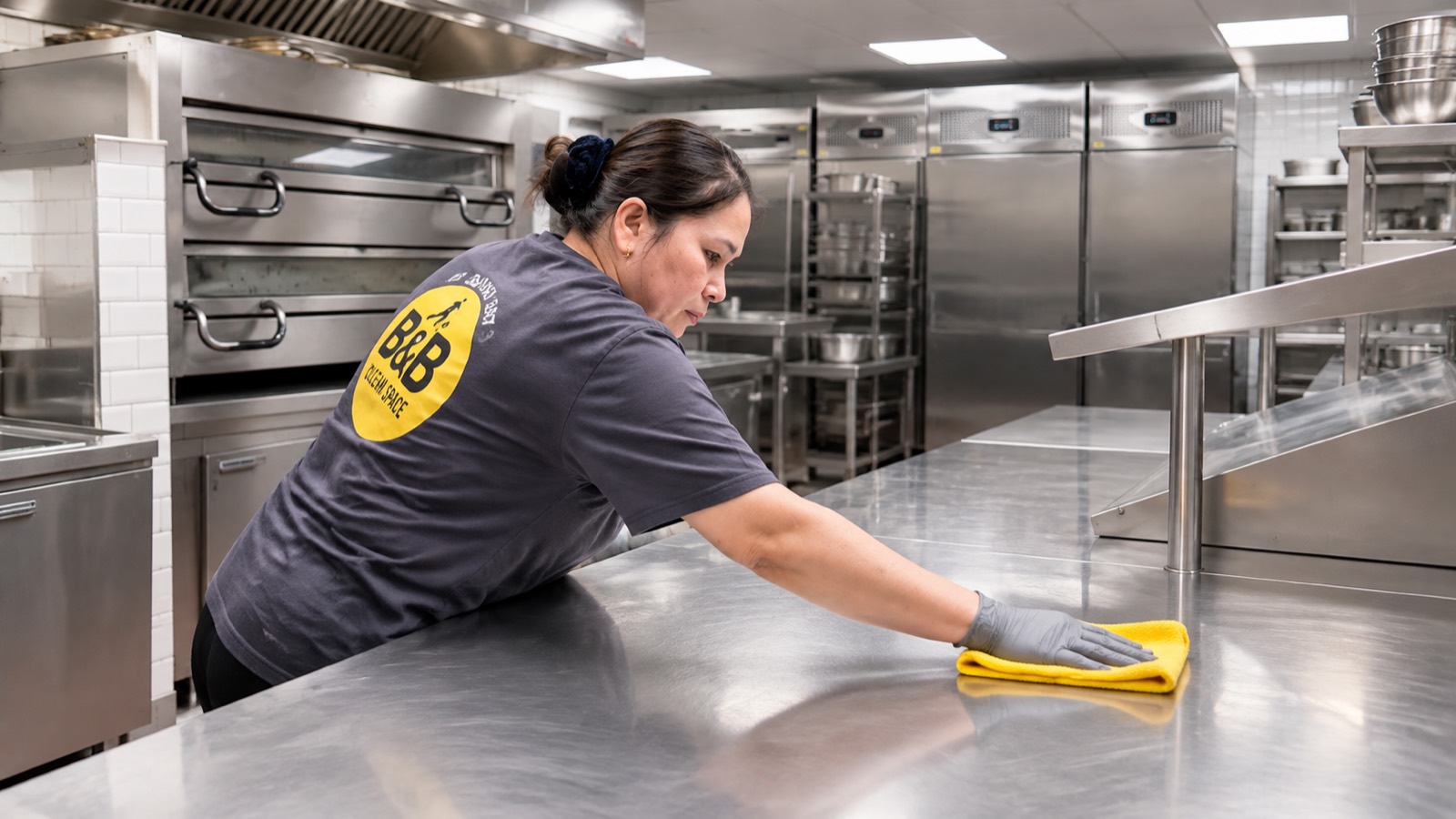
Work surfaces and equipment are degreased with alkaline agents left on for the set contact time — after closing, once the ranges have cooled.
How many people
and hours a restaurant needs
Set the area and the schedule — you get the crew size, hours on site and a price range. The exact figure comes after the survey.
A day attendant is a cleaner who works during guest hours: the dining room between sittings, washrooms, spills and taking the waste out. The hot line isn’t cleaned on their shift: grease comes off after closing, once the ranges have cooled.
Clear terms,
a straightforward start a straightforward start
Tap a stage to see what happens on site and what you get at the end of it.
Survey
A walk of the site, areas measured zone by zone, a look at the kitchen, the hoods and the gullies.
Quote
Method statement by area, a separate schedule for hoods and grease traps, crew size and price.
Launch
Crew selected and briefed, chemicals and machinery delivered, an initial deep clean of the kitchen.
Full operation
First quality inspection, checklist adjusted, SLA report issued.
Tell us
about the site
Send us the area and the shift pattern — we’ll arrange a survey and have your quote ready within five working days.
Al Barsha, Dubai, UAE